


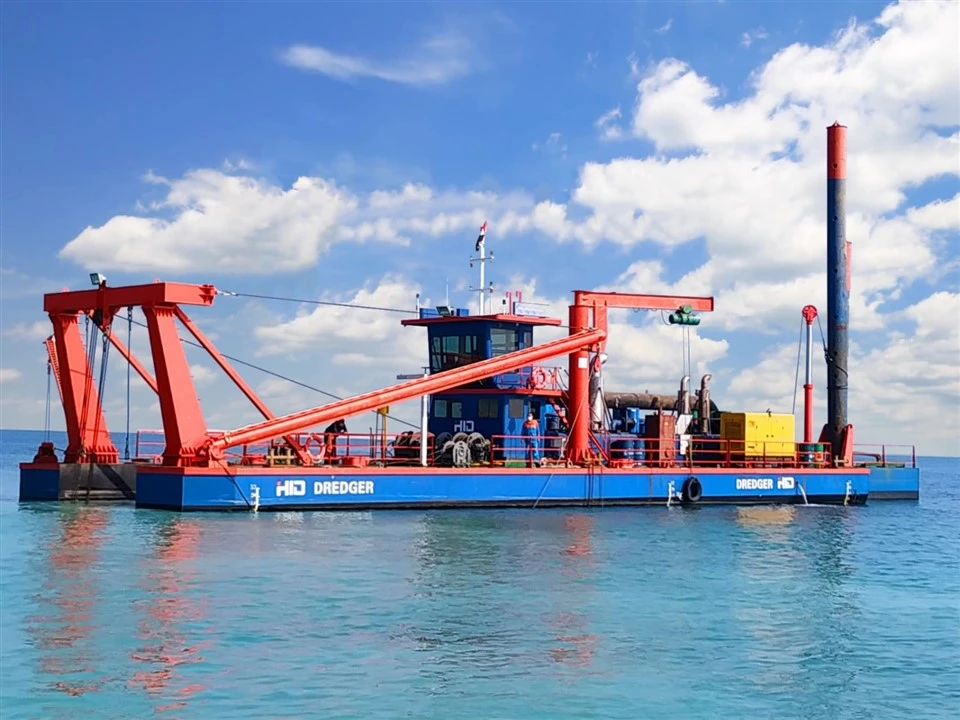
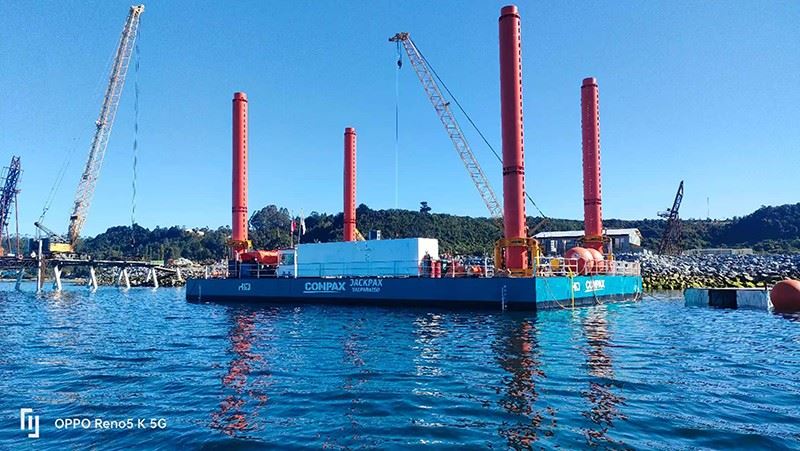
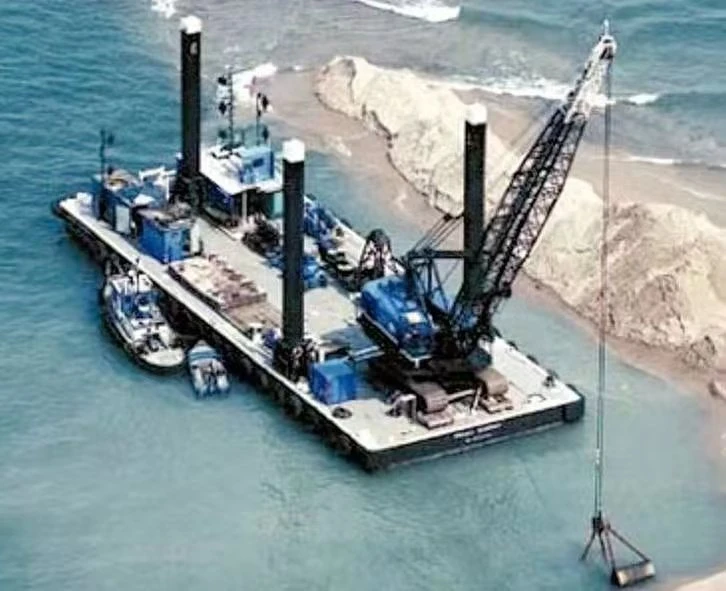
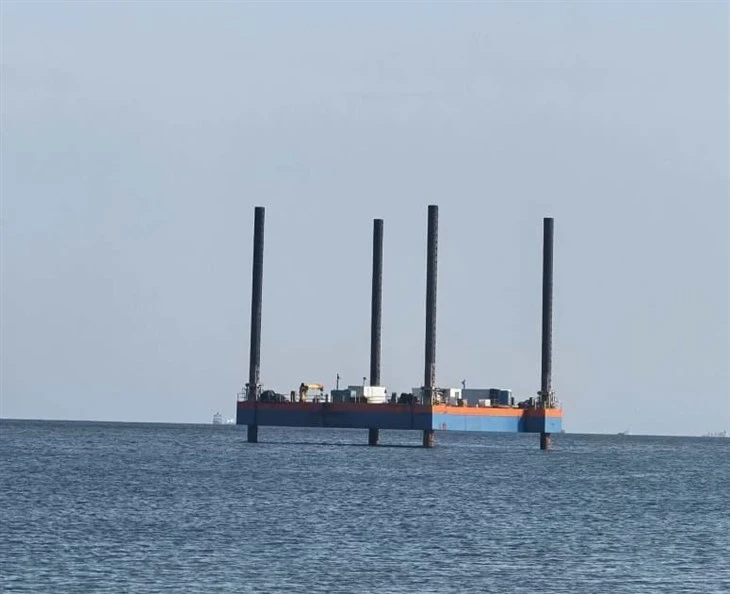
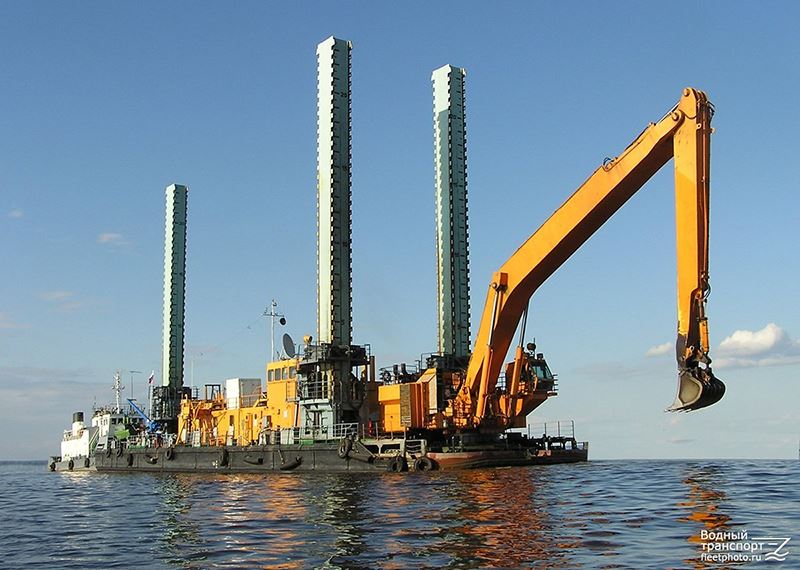
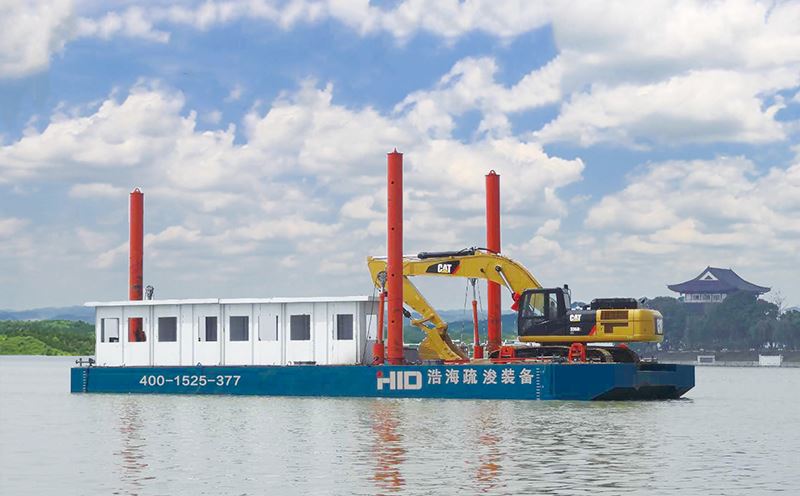
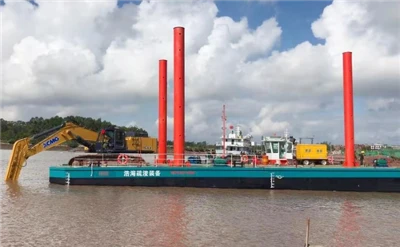
An excavator work platform – a steel pontoon fitted with a standard excavator – is one of the most practical and economical floating machines in the marine construction and dredging industry. It turns a common excavator into a versatile floating worksite for dredging, material handling, piling and bank protection work.
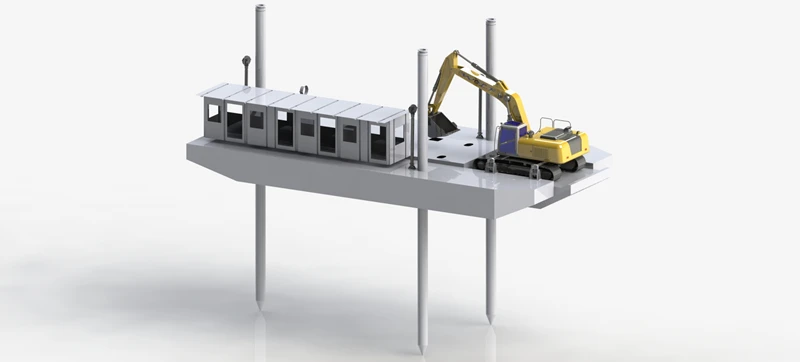
What is an excavator work platform? The platform is a rectangular steel pontoon (barge) with a reinforced deck area where a hydraulic excavator (typically 20-35 tons) is mounted. The excavator can work from the platform over the water on three sides, digging, lifting and loading material. Many platforms are self-propelled with diesel engines and propellers, so they can move between working sites without a tug.
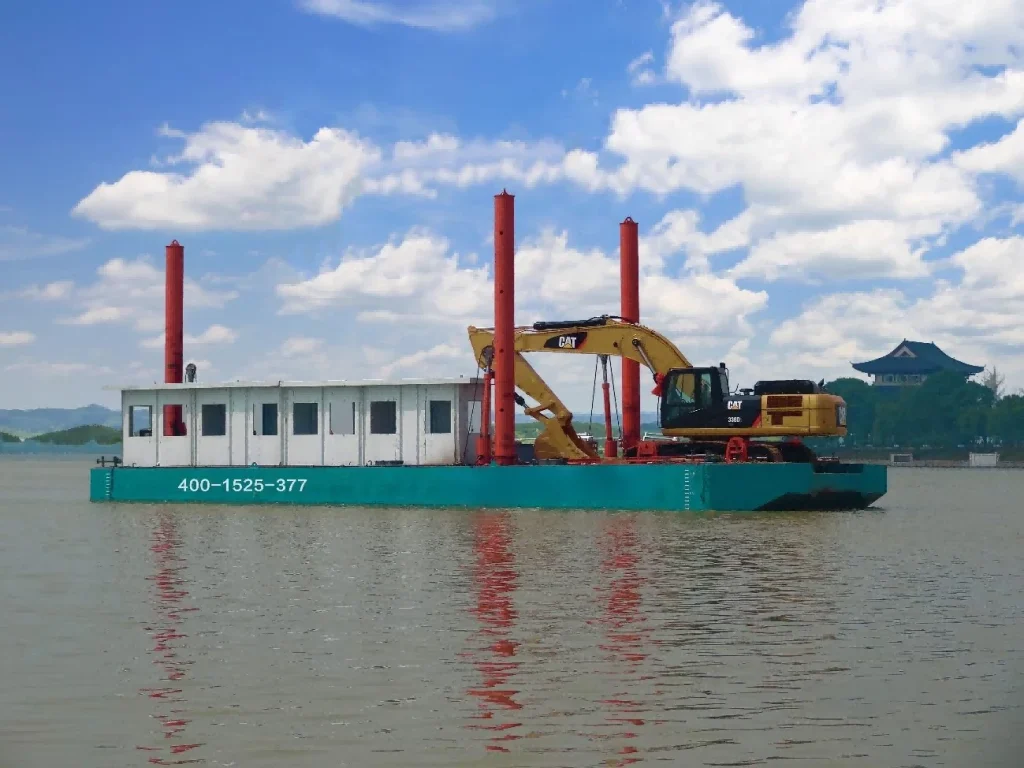
Key specifications of a typical platform (YS-EB60):
Overall length: 20 m
Breadth: 9 m
Pontoon depth: 1.8 m
Hull material: CCS marine steel plate
Matched excavator: up to 30 tons
Loading capacity: ≥60 tons
Total weight: 58.32 tons
Main engines: 2 x Cummins NT855-M, 179 kW @ 1800 rpm
Gearboxes: 2 x Fada FD135
Propellers: 2 pcs, dia. 720 mm
Bollards: 6 pairs
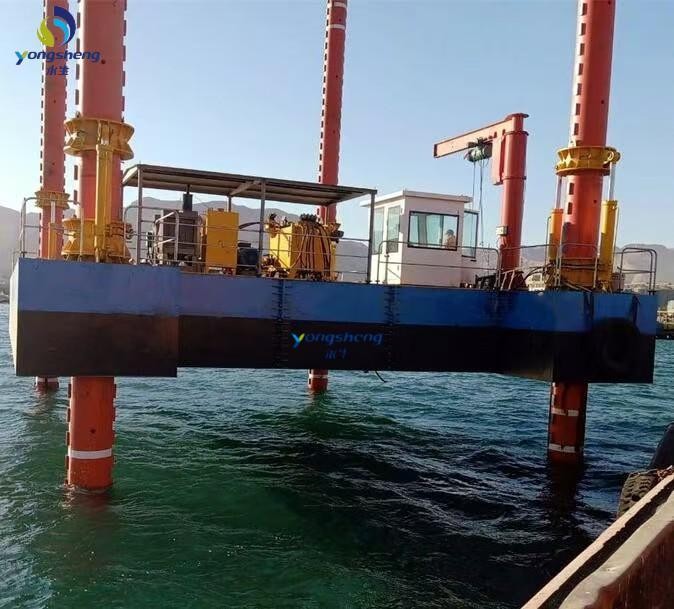
Spud piles: 3 pcs, 8 m each (for anchoring in position)
What can it do?
Backhoe dredging. With a long-reach excavator arm, the platform digs silt, clay, sand and even stones from riverbeds, canals and harbors, and loads the material onto barges or trucks.
Material handling and loading. The excavator can grab and lift rocks, demolition debris, aggregates and scrap from the water or the bank, and load them onto transport barges.
Piling and bank protection. With a vibratory or hydraulic pile driver attachment, the platform drives sheet piles, timber piles and concrete piles for bank protection, cofferdams and marine structures.
Aquatic plant and garbage cleanup. With a weed-cutting or grap bucket, the platform clears aquatic weeds, floating garbage and driftwood from waterways.
Temporary crane and lifting duties. The excavator serves as a lifting machine for equipment, pipes and precast elements during waterway works.
Why choose a pontoon with excavator instead of a dredger?
Lower cost: uses a standard excavator you may already own
Multi-function: one platform does dredging, lifting, piling and cleanup
Easy to operate: standard excavator controls, widely available operators
Easy transport: the pontoon can be towed or, if self-propelled, moved by its own engines
Flexible: the excavator can be lifted off and the pontoon used for other cargo or platform duties
Choosing the right platform. Define: the excavator size you plan to mount (20-35 tons), required loading capacity, working depth (longer arms dig deeper), whether self-propulsion is needed, and the anchoring system (spud piles for fixed work, anchors for open water). The platform’s deck reinforcement must match the excavator’s weight and track load.
Yongsheng builds excavator work platforms from 15 m to 25 m in length, with loading capacities from 30 to 80 tons, matched to excavators from 15 to 40 tons. Custom configurations – additional spud piles, cranes, screens or hydraulic attachments – are available on request.