

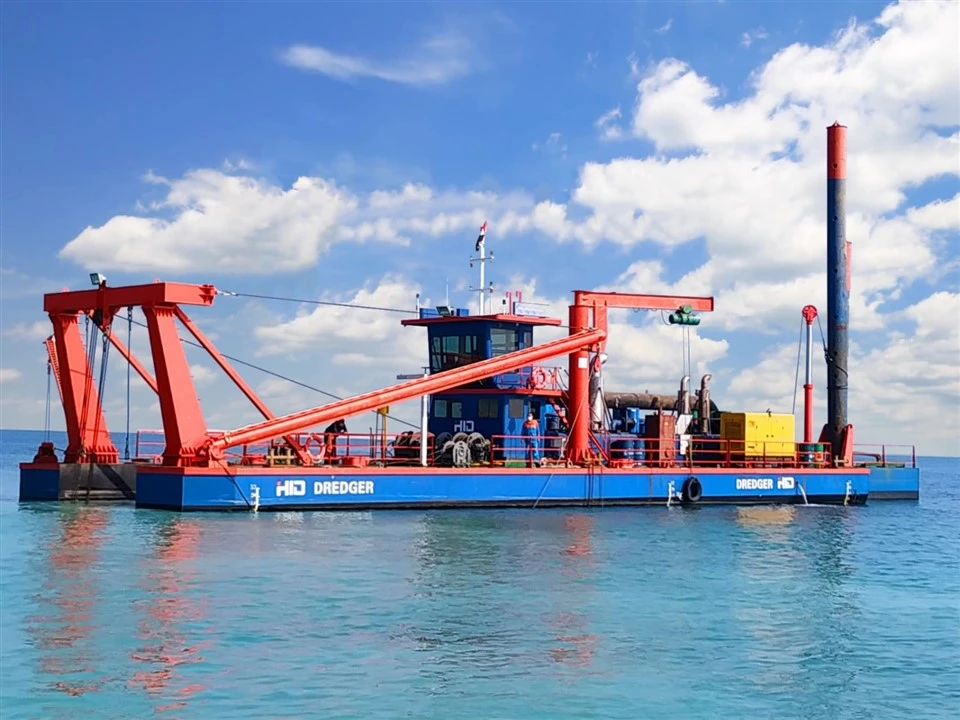

How to Choose the Right Cutter Suction Dredger for Your Project Buying a cutter suction dredger is a long-term investment, and the wrong choice can cost far more than the machine itself. Here are the key factors to work through before contacting a manufacturer. Dredging depth. The ladder length and pump suction determine how deep the machine can work. A 6-meter machine and a 25-meter machine are completely different vessels, so define your maximum working depth first. Production capacity. Capacity is usually expressed in m3/h of water flow. A small 8-inch dredger moves around 800 m3/h, while a large 20-inch unit can move 5,000 m3/h or more. Match the capacity to the project deadline, not to what looks impressive. Discharge distance. If the dredged material must be pumped far from the water, you need a bigger pump or a booster. Tell the manufacturer the exact distance early, because it changes the pump specification. Material type. Sand, silt, clay and hard soil behave very differently under the cutter. Hard soil or compacted clay may require a stronger cutter head or a bucket wheel configuration. Engine and drive. Diesel-mechanical, diesel-hydraulic and fully electric drives all have trade-offs in fuel cost, maintenance and reliability. Ask which configuration is common for your size class. Transport. Dismountable dredgers can be packed into containers and shipped at lower cost. If your site is inland or has road restrictions, a detachable structure may be the deciding factor. The simplest approach is to send the manufacturer your project data – depth, capacity, distance, material – and let their engineers propose a configuration. A factory that asks about these details before quoting is usually a factory you can trust.